
The Missing Half of Old Towne Orange's Renovation Math
Old Towne Orange carries a distinction few buyers think to check before falling for a wraparound porch or a hundred-year-old oak door: it sits inside the largest National Register historic district in California. That scale is part of the appeal. It's also part of the cost. A financial tool that can offset some of those costs has not accepted new applications since 2025, and no reopening date has been announced.
Those are factors worth understanding before you write an offer, plan a remodel, or list a house inside the boundary.
Old Towne isn't a single designation. It layers two: the Plaza Historic District, listed on the National Register of Historic Places in 1982, and the broader Old Towne Orange Historic District, listed in 1997. Together they cover roughly a square mile radiating out from the Plaza.
Inside that boundary, the City of Orange's Historic Preservation Design Standards apply to every property, and most exterior changes need review for conformance. A lot of projects clear through a staff-level Minor Design Review. Anything the city considers a substantial change goes in front of the Design Review Committee, a body that evaluates the work against the Secretary of the Interior's Standards for Rehabilitation as well as the city's own design criteria.
None of that is unusual for a National Register district. What's changed recently is how much has to happen before a project even gets in front of anyone.
The City of Orange added a new submittal requirement that applies to additions, new infill construction, and accessory dwelling units on historic properties. Before an application can move forward, the owner now has to commission a historic resource assessment report, prepared by a consultant who meets the Secretary of the Interior's Professional Qualifications Standards, evaluating the project against both the federal rehabilitation standards and the city's own design standards for Old Towne.
That report costs money and time before the first plan check fee is paid. The city frames it as a way to shorten the back-and-forth later, and there's a real argument for that. But it means the upfront cost of touching a historic property in Orange has grown, at the same moment the main financial offset for that cost sits on hold.
Roofing is a smaller but telling example of where two rulebooks collide inside the district. According to Vision Roof Services, Orange sits in California Energy Commission Climate Zone 8, which requires re-roofs to meet Title 24 cool-roof standards on the prescriptive path. That typically means a product with a specific rated solar reflectance and thermal emittance. On a historic home, though, the design standards can also limit you to a specific covering, such as clay tile, to preserve the roofline's original character. Getting both requirements satisfied on the same permit is a coordination problem most homeowners don't discover until they're already collecting roofing bids.
Here's roughly how the process compares to a non-historic Orange address:
| Step | Outside Old Towne | Inside Old Towne |
|---|---|---|
| Pre-design and feasibility | 1-2 weeks | 1-2 weeks, plus historic resource assessment |
| City plan check | 4-8 weeks | 4-8 weeks, run in parallel with historic review |
| Design Review Committee review | Not applicable | 8-12 weeks |
| Typical ADU cost premium | Baseline | 10-15% higher |
The extra time isn't necessarily a dealbreaker. It's a number that belongs in the budget and the closing timeline, not a surprise that shows up in week nine.
For nearly three decades, the Mills Act has been the city's answer to that added burden. Created by the Orange City Council in 1998 under the state's enabling legislation, the program lets owners of qualifying historic properties enter a contract with the city: the owner gets a reduction in property taxes, calculated by the Orange County Assessor. More than 200 properties in Orange have used it. The Old Towne Preservation Association says the program is capped at 20 new contracts per tax year, with a waiting list for anyone hoping to get in.
That's the part that's stopped moving. The city is not currently accepting new Mills Act applications while the program is under what it describes as review, and as of the most recent public update from the Old Towne Preservation Association in January 2026, there's still no timeline for when applications might reopen.
The freeze isn't the only friction. In August 2025 the city sent a letter to Mills Act contract holders that, according to OTPA's account, created enough confusion and concern that city staff met with OTPA and a second group called the Orange Legacy Alliance and ultimately acknowledged the letter shouldn't have gone out as written. A follow-up letter is now planned specifically for the roughly 40 properties the city considers out of compliance, mainly for unpaid annual filing fees or missing documentation. OTPA has been directing contract holders with questions to the city's historic preservation planner, Michelle Dulalia, and recommending they keep a written record of the conversation.
None of that means the program is going away. It means anyone counting on a Mills Act contract to make a historic-property purchase pencil out right now has to plan around a program that is, at minimum, administratively unsettled.
This is the distinction that catches people off guard in escrow. A Mills Act contract is recorded against the property, not the person. If a house you're buying already has one, it transfers automatically. You inherit the tax benefit.
That's meaningfully different from buying a historic-eligible property that has never been enrolled. Because new applications are on hold, there's currently no path to add that tax benefit to a property that doesn't already have it, no matter how qualified the house might be under the city's historic survey. A buyer comparing two similar Old Towne listings, one with an active Mills Act contract and one without, isn't just comparing houses. They're comparing whether a real, ongoing property tax reduction comes with the deed or not, and right now there's no way to create that benefit fresh.
For a seller, an active Mills Act contract in good standing is worth pointing out clearly and early. For a buyer, it's worth asking directly about the property's status, given how many contracts the city currently considers behind.
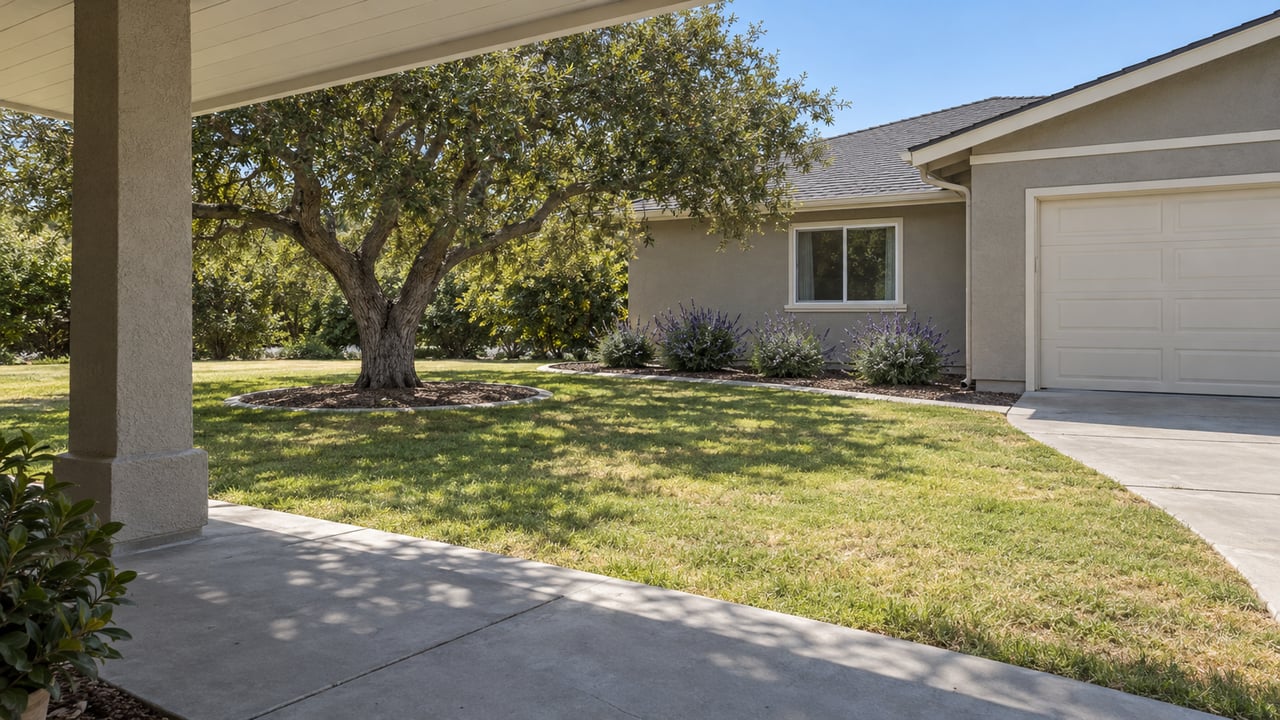
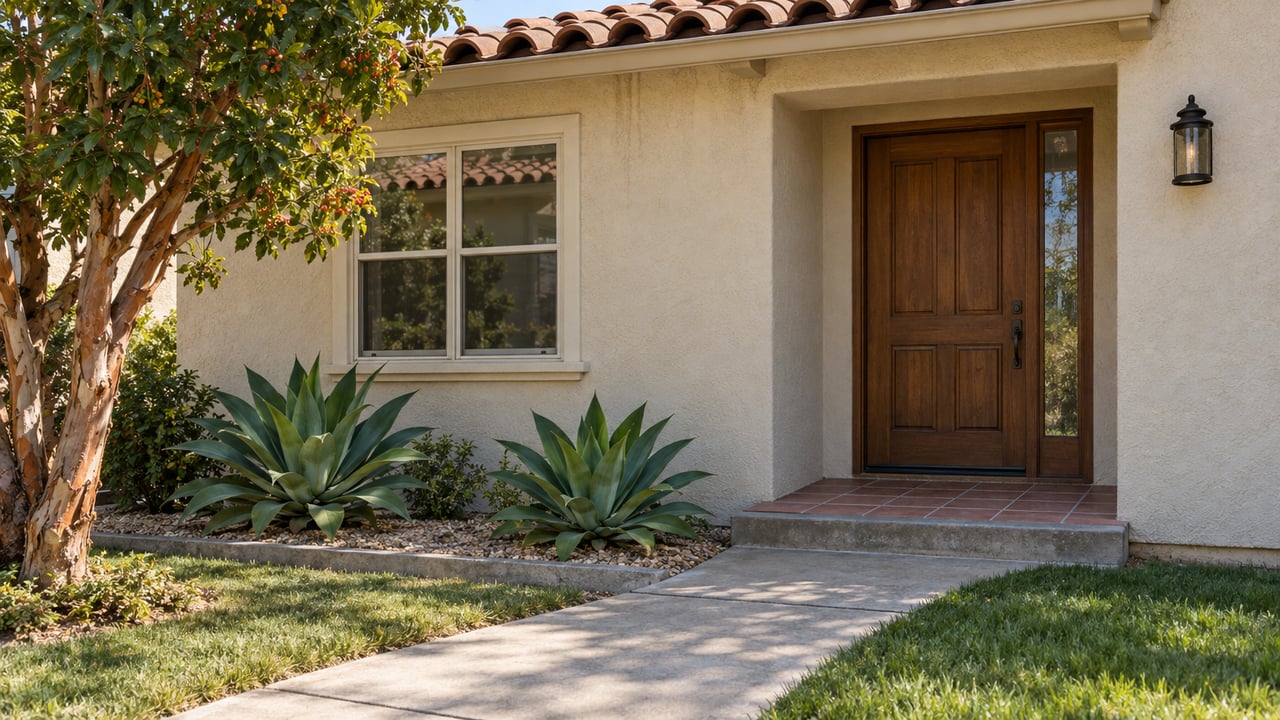
Beyond structure and roofline, the design standards reach into the yard. Artificial turf is prohibited in parkways, front yards, and side yards visible from the street. Mulch, gravel, decomposed granite, and unplanted soil are all listed as incompatible with the historic streetscape, though drought-tolerant plantings are allowed if they read consistently with a historic front yard. Replacement hardscape, driveways and walkways included, is expected to match the color, texture, and finish of what's already there.
Windows get similar treatment. The standards treat original windows and doors as character-defining features to be repaired rather than replaced, partly because the old-growth lumber in century-old sashes tends to outlast anything available today. That's a preservation argument, but it's also a practical one for a seller weighing whether to swap out a drafty original window before listing or simply fix what's there.
Old Towne's proximity to Chapman University keeps rental demand strong, and it's part of why an ADU or garage conversion shows up so often in renovation conversations here. Some estimates put the added monthly rent from that kind of conversion in the $2,000 to $2,500 range. That's a real incentive, but it doesn't sidestep the historic resource assessment requirement that now applies to any accessory structure being converted into livable space. The rental upside and the added review timeline both belong in the same spreadsheet.
If you're planning a pre-sale renovation on a historic-eligible property, the sequence that saves the most time is contacting the city's Historic Preservation Planning staff before finalizing a design, not after. Getting an early read on whether a project needs a full Design Review Committee hearing or can clear through staff-level Minor Design Review shapes both the budget and the calendar for listing.
Does a Mills Act contract transfer automatically when I buy a home that already has one? Yes. It's recorded against the property and transfers automatically to the new owner.
Can I apply for a new Mills Act contract right now? Not currently. The city has paused new applications while the program is under review, and no resumption date has been announced as of the most recent public update.
Does every exterior change need a full hearing? No. Many projects clear through staff-level Minor Design Review. Substantial changes go to the Design Review Committee, which adds real time to the schedule.
Will installing artificial turf or gravel landscaping in my front yard cause a problem? It's likely to run against the design standards if the yard is visible from the street. Those elements are specifically listed as incompatible with the historic streetscape.
Old Towne's history is exactly what makes it valuable, and exactly what makes the math different from anywhere else in the city. If you're weighing a purchase, a sale, or a renovation inside the boundary, The Brad Kerr Team can walk through what a specific property's Mills Act status, design review history, and permitting timeline actually mean for your plans. Request a Free Home Valuation to start that conversation with real numbers in hand.
This article is general information, not legal, tax or financial advice. Consult a qualified professional about your situation.
We provide the expertise, resources, and cutting-edge tools you need to navigate the real estate market with confidence. Whether you're buying or selling, we offer insights and solutions that set us apart. Stay informed about the latest market trends and let us guide you every step of the way.

Brad Kerr Team
BRAD KERR | CA DRE# 01182768
[email protected]
(714) 366-0990
3261 N HARBOR BLVD FULLERTON CA 92835