Historic Whittier Neighborhood Homes and Classic Styles
If you love homes with character, Whittier gives you plenty to explore. From bungalow-era streets near Uptown to hillside houses with revival details, the city’s older neighborhoods tell the story of how Whittier grew over time. If you are thinking about buying or selling here, it helps to know where the historic pockets are, which classic styles stand out, and what ownership can involve. Let’s dive in.
Whittier’s preservation story is centered in four locally designated historic districts: Hadley-Greenleaf, Central Park, College Hills, and Earlham. The city also recognizes more than 100 locally designated historic landmarks. That makes Whittier especially appealing if you are drawn to homes with architectural detail and a stronger connection to the city’s early development.
The location of these older homes is not random. According to the city, early development centered around Uptown and the original town site, while post-1940 growth expanded outward as car-oriented development and postwar growth reshaped the city. In simple terms, if you want to see Whittier’s oldest residential patterns, you will usually start near the older core.
Hadley-Greenleaf is one of the clearest places to see Whittier’s early residential character. The city’s draft district report notes many 1920s homes in the Craftsman style, along with earlier Victorian cottages, Spanish Colonial and Mediterranean Revival homes, Minimal Traditional homes, and other revival styles.
Beyond the houses themselves, the district is known for mature trees, front setbacks, porches, and some low retaining walls. If you are house hunting here, the appeal often comes from the full streetscape, not just one property at a time. For sellers, that means original exterior character can play a major role in how buyers respond.
Central Park offers a more compact historic setting near Uptown. The district follows a regular street grid, with buildings facing main streets and accessory structures generally placed to the rear or along alleys. The city also notes relatively few curb cuts, which helps preserve a more continuous streetscape.
The draft report describes mostly one- and two-story buildings with regular setbacks, covered porches or porticoes, and a strong public-green-space feel around Central Park itself. If you enjoy walkable historic areas with a more urban neighborhood pattern, this district stands out.
College Hills is especially important in Whittier’s history because the city describes it as the first planned hillside development, originally subdivided in 1923. It includes Spanish Revival, Colonial Revival, Mission Revival, Tudor, Provincial Revival, and California Ranch homes.
This area also shows how architecture and topography work together. Because it was planned around steep slopes, curving streets, and grade changes, buyers should pay close attention to driveway access, drainage, landscaping, and lot layout. Those features can shape both daily living and the scope of future exterior projects.
Earlham is a smaller district, but it has a very specific place in Whittier’s story. The city identifies it as a college-adjacent district of seven properties associated with Whittier College faculty housing.
Architecturally, Earlham includes Dutch Colonial Revival, Craftsman, and Queen Anne/Craftsman examples. For buyers who appreciate a smaller historic enclave with distinct roots, this district offers a concentrated look at early residential design tied to the college area.
Whittier’s housing mix reflects different eras of growth. The city itself contrasts historic Craftsman bungalows with California ranch-style homes and larger executive homes in other areas, which helps frame what you may encounter as you move from older neighborhoods to later development patterns.
In the historic districts, the most visible classic types are often Craftsman bungalows, Spanish or Mediterranean Revival homes, Victorian cottages, and later California Ranch houses. Each style brings a different look, layout, and maintenance profile.
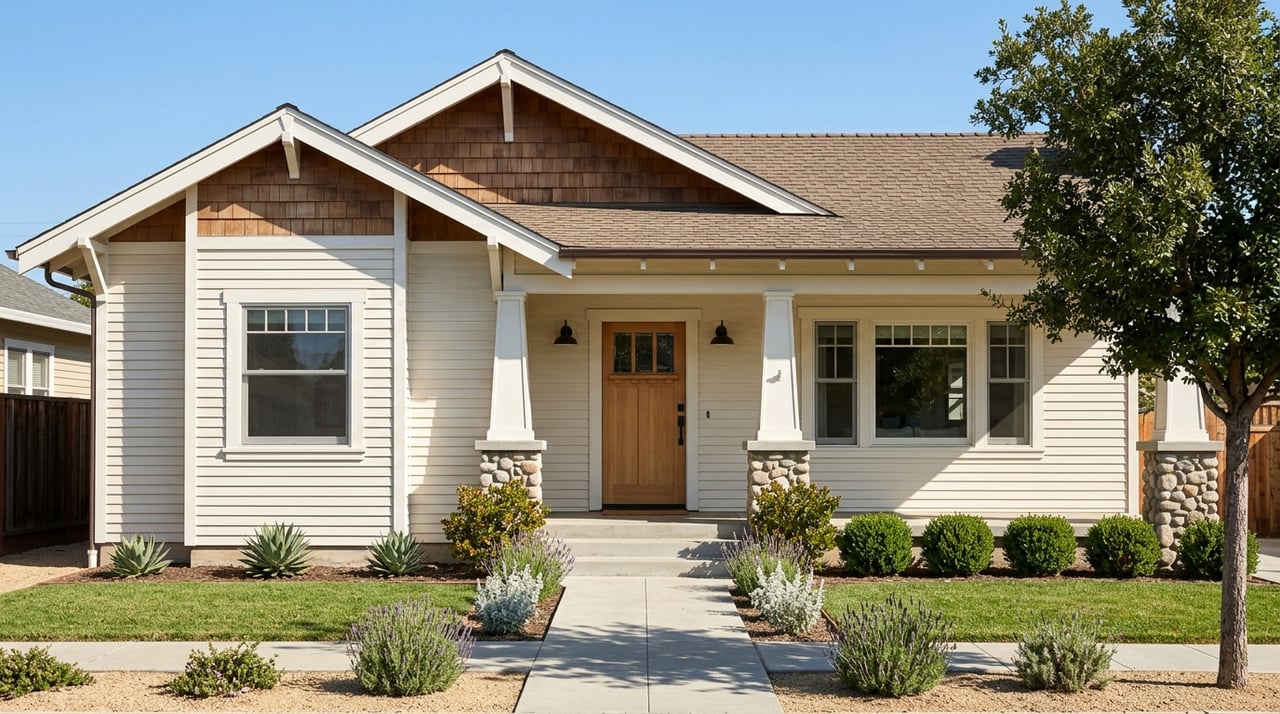
Craftsman homes are some of the most recognizable historic properties in Whittier. The city’s style guide describes them as generally one to two stories with low-pitched roofs, wide eaves, exposed rafters or beams, covered porches, and natural materials like wood, stone, brick, and shingles.
For buyers, that charm often comes with more visible detail to maintain. Porches, siding, trim, and older window patterns can all require more attention than you might expect in a newer home. For sellers, those same features can become a major part of the home’s appeal when they are well cared for.
Spanish Colonial and Mediterranean Revival homes are a strong part of Whittier’s historic identity, especially in districts like Hadley-Greenleaf and College Hills. These homes often stand out for their period look and strong presence within the streetscape.
When you tour homes in these styles, pay attention to exterior materials, rooflines, and any changes that may have been made over time. In historic areas, exterior consistency can matter just as much as interior updates.
Victorian cottages are part of the earlier layer of Whittier housing, especially in areas close to the city’s original development pattern. They bring a different scale and visual feel than later 1920s and postwar homes.
These homes can appeal to buyers who want a property with older proportions and a strong sense of history. At the same time, it is smart to look closely at the condition of exterior details, since age and upkeep can have a big effect on cost and planning.
California Ranch homes connect more closely to Whittier’s later growth. In a district like College Hills, they appear alongside earlier revival styles, showing how the city evolved over time.
For many buyers, ranch homes offer a more familiar layout and a simpler exterior profile than earlier historic styles. They may still sit in areas with special historic context, so it is worth confirming whether a home is contributing to a district or simply an older home with vintage appeal.
One of the best ways to understand Whittier housing is to connect neighborhoods with the era in which they developed. Early 1900s growth centered near Uptown and Whittier College, which is why bungalow-era and early revival homes cluster there.
Later, post-1940 expansion pushed development outward and introduced more ranch-oriented housing patterns. That means your home search can shift quickly depending on where you look. One part of Whittier may offer porches, tighter street grids, and early architectural styles, while another reflects the wider lots and later planning patterns of the postwar period.
In Whittier, historic ownership is not just about appearance. The city treats preservation as an active permitting issue. A Certificate of Appropriateness is required before exterior work on a historic resource, a contributing property in a historic district, or any vintage building built before 1941.
That rule is important because many buyers assume review only applies to landmark properties. In Whittier, pre-1941 vintage status can also matter for exterior work. Interior-only work is not subject to that review, which creates an important distinction when you are planning improvements.
If you are considering changes to an older Whittier home, start by looking at the exterior envelope. Windows, porches, cladding, rooflines, and additions are the areas most likely to trigger city review for a protected property.
This is useful for both buyers and sellers. Buyers can ask better questions before making an offer, and sellers can prepare for likely buyer concerns before putting a home on the market. In many cases, knowing the rules early can save time and reduce surprises.
Historic homes often ask you to balance charm with practical ownership. A beautifully detailed porch or hillside lot may be part of what makes a home special, but it can also shape your maintenance plan and your remodeling options.
That is especially true in College Hills, where slopes, lot geometry, and access can affect exterior work. It is also true in older flatland districts where original materials and architectural details play a bigger role in the home’s identity.
For qualifying historic properties, Whittier offers Mills Act contracts, which can reduce property taxes. The city says it has offered Mills Act contracts since 2001.
This does not mean every older home automatically qualifies. The program is available to owners of listed or contributing historic properties. If you are buying or selling a qualifying home, this can be an important part of the overall ownership picture and a valuable point to understand early.
If you are buying in Whittier, understanding the difference between a historic district home, a contributing property, and a simply older home can help you narrow your search and ask smarter questions. It can also help you match your renovation goals with the type of property you are considering.
If you are selling, historic context can shape how your home is positioned. Architectural style, streetscape features, district identity, and the condition of visible exterior elements can all influence buyer interest. A thoughtful marketing approach can help buyers see not just the house, but the story and setting that make it stand out.
Whittier’s historic neighborhoods offer more than visual charm. They give you a window into how the city developed, from early Uptown-centered growth to hillside planning and later ranch-era expansion. If you want help evaluating a Whittier home’s style, setting, and market appeal, the Brad Kerr Team is here to help.

We provide the expertise, resources, and cutting-edge tools you need to navigate the real estate market with confidence. Whether you're buying or selling, we offer insights and solutions that set us apart. Stay informed about the latest market trends and let us guide you every step of the way.
Brad Kerr Team
BRAD KERR | CA DRE# 01182768
[email protected]
(714) 366-0990
3261 N HARBOR BLVD FULLERTON CA 92835