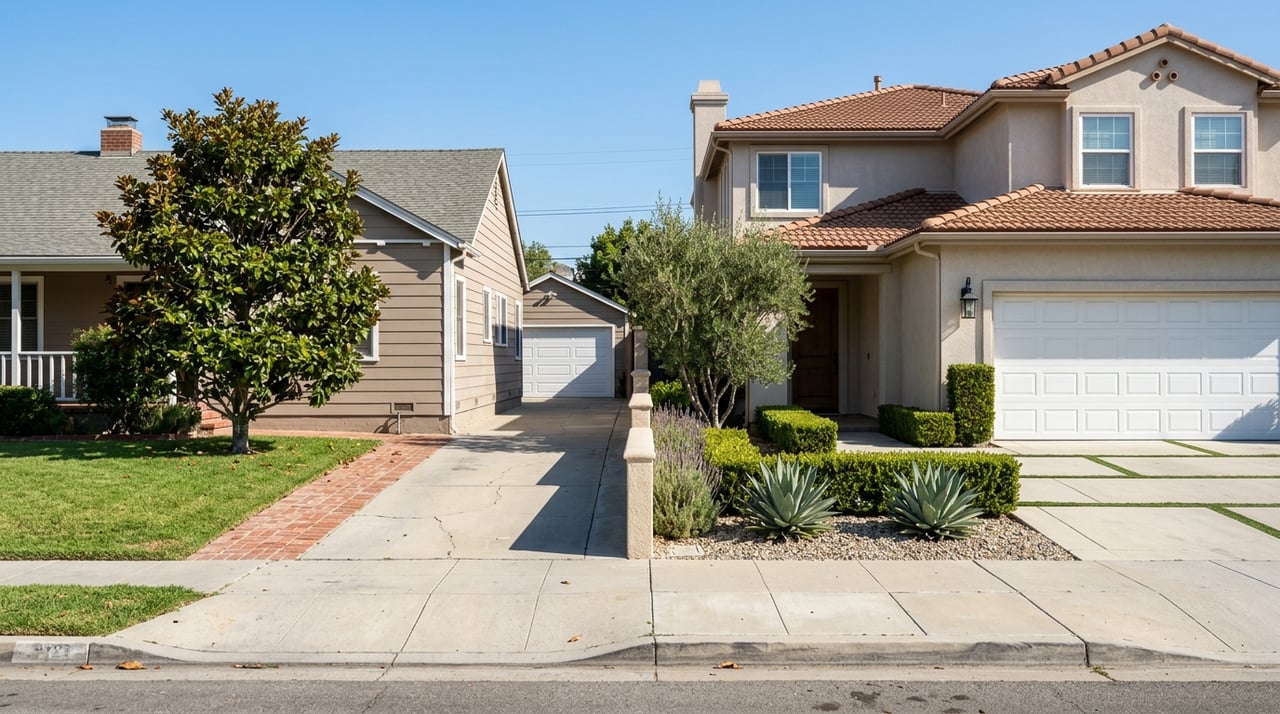
Old Towne Orange vs Newer Tracts in Orange, CA
Wondering whether Old Towne Orange or one of Orange’s newer tracts fits you better? It is a smart question, because these two parts of the same city can offer very different day-to-day ownership experiences. If you are weighing character against convenience, or walkability against planning consistency, this guide will help you compare the trade-offs so you can focus on the lifestyle and maintenance style that fits you best. Let’s dive in.
Orange stands out because it includes both a historic core and later planned neighborhoods, each shaped by different city rules and development patterns. The city describes Old Towne Orange as the largest nationally registered historic district in California, with buildings dating back to the 1880s and a period of significance from 1880 to 1940.
Outside that historic core, the city uses different planning tools such as specific plans, planned-community texts, and small-lot or infill design guidelines. That means the contrast between Old Towne and newer tracts is not just about home age. It is also about how each area is regulated, designed, and maintained over time.
Orange’s housing stock also helps explain why the city feels so mixed by era. In the city’s 2021-2029 Housing Element, 47.1% of units were built from 1960 to 1979, 5.5% were built in 1939 or earlier, and 1.1% were built in 2014 or later.
Old Towne Orange is defined by historic architecture, a traditional street layout, and a more closely managed exterior environment. The city’s preservation guidance points to a wide range of historic styles, including Craftsman, Folk Victorian, Spanish Colonial Revival, and Tudor Revival.
Many original properties still retain their historic integrity. The city also notes that many lots include smaller accessory structures like carriage houses, garages, or sheds, which adds to the district’s older, layered feel.
The streetscape matters here too. Preservation guidance emphasizes open space, walkways, driveways, and low, transparent fencing, which creates a more compact and visually connected setting than what you often see in later suburban neighborhoods.
If you like a central, active setting, Old Towne has a strong sense of place. The city describes it as a gathering area with antique stores, specialty shops, restaurants, art galleries, Chapman University, City Hall, and the Orange Public Library & History Center.
It is also tied to recurring community events, including the Orange International Street Fair, Treats in the Streets, the Tree Lighting Ceremony, and the Saturday Orange Home Grown Farmers and Artisans Market. For some buyers, that energy is a major draw. For others, it may mean thinking more carefully about access, parking, and overall pace.
Newer tracts in Orange tend to feel more plan-driven and residential. The city’s General Plan identifies specific-plan areas such as Serrano Heights and Upper Peters Canyon, and the Planning Division manages those areas under frameworks that differ from Old Towne standards.
That matters because newer neighborhoods are generally shaped around compatibility, circulation, parking, and usable open space. In other words, they are not trying to preserve historic fabric. They are trying to create a more predictable neighborhood layout and function.
The city’s Small Lot Subdivision Guidelines also show that newer Orange neighborhoods can vary more than many buyers expect. Some may be compact infill communities, while others may be larger planned neighborhoods with different lot sizes and configurations.
Compared with Old Towne’s historic main street character, newer tracts usually read as more residential, more structured, and more access-oriented. The city’s design standards focus on things like keeping buildings oriented to the street, minimizing curb cuts, preserving privacy, and maintaining usable outdoor space.
The guidelines also say new homes should vary in design so subdivisions do not feel monotonous. So while newer tracts often feel more standardized in planning, they are not always visually identical.
One of the biggest differences between Old Towne and newer tracts is how the homes sit on the lot and how the neighborhood feels from the street. In Old Towne, you are more likely to see compact parcels, older accessory buildings, established walkways, and a streetscape shaped by preservation standards.
In newer tracts, the city’s design approach is more focused on layout efficiency, parking access, privacy, and outdoor usability. That often creates a cleaner, more coordinated neighborhood pattern, even when lot sizes and home designs vary.
If you are drawn to homes with visible history and irregular charm, Old Towne may feel more compelling. If you prefer a neighborhood where planning logic and circulation are easier to read, a newer tract may feel more comfortable.
For many buyers, this is where the decision gets real. The city notes that housing over 30 years old is typically in need of some major rehabilitation, such as roof, foundation, and plumbing work, and many of the city’s older homes are concentrated in the Old Towne Historic District.
Old Towne also comes with preservation expectations. The city treats historic windows and doors as character-defining features that should be repaired and restored rather than casually replaced, which can affect both project scope and decision-making for owners.
That does not mean every Old Towne property is a major project. It does mean you should go in expecting a different maintenance conversation than you would in a later tract neighborhood.
Newer tracts may reduce some of the age-related repair risks that buyers associate with older homes, but they can introduce other forms of ongoing cost. Some later neighborhoods rely on formal upkeep structures tied to the community itself.
For example, Santiago Hills was formed in 1987 and is funded by an annual landscape maintenance assessment paid by property owners, with the city approving that assessment each year. So the trade-off may not be old-house rehabilitation versus no extra cost. It may be hands-on property maintenance versus recurring neighborhood-level upkeep charges.
Parking is another clear separator between the two. In Old Towne, parking is an active city policy issue, and the city launched paid parking in 2025 with on-street and lot pricing ranging from $1.25 to $2.00 per hour depending on location.
The city also identifies free or long-term parking options, and Old Towne is accessible by train, bus, and bike, with Orange Station steps from the Plaza. If you value transit access and a more walkable setting, that can be a real plus.
In newer tracts, parking and vehicle access are usually built into the neighborhood layout itself. The city’s newer-design standards treat parking and circulation as core design issues, so these neighborhoods often feel more car-oriented and more predictable from an access standpoint.
The better question is usually not whether old is better than new. It is what kind of ownership experience you want.
If you are drawn to historic character, a walkable district, and a home with architectural personality, Old Towne may be the right fit. You just need to be comfortable with preservation rules, possible rehabilitation needs, and a parking environment that works differently than a typical suburban tract.
If you want a more plan-driven neighborhood with parking and access considered upfront, newer tracts may feel easier to live in day to day. You may also prefer the broader range of lot patterns and the more predictable design framework found outside the historic core.
| Feature | Old Towne Orange | Newer Tracts in Orange |
|---|---|---|
| Core identity | Historic district | Planned or specific-plan neighborhood |
| Main development era | 1880-1940 period of significance | Mostly later suburban and infill development |
| Streetscape feel | Compact, historic, closely regulated | More structured, access-oriented, residential |
| Exterior oversight | Strong preservation guidance | Design standards tied to planning framework |
| Maintenance pattern | More likely to need major rehabilitation over time | May trade age-related repairs for assessments or district upkeep |
| Parking experience | Paid parking zones, some free options, transit access | Parking and circulation built into neighborhood layout |
| Lifestyle feel | Active central district with events and shops | More function-oriented residential setting |
The right fit depends on your priorities, your budget for upkeep, and how you want your home to function over the next several years. A buyer who loves original architecture and a more walkable setting may gladly accept the responsibilities that come with a historic property.
Another buyer may want planning consistency, easier parking, and a neighborhood that feels more straightforward to maintain. Neither choice is better across the board. The goal is matching the home and neighborhood to the ownership experience you actually want.
If you are comparing homes in Orange and want practical guidance on how a property’s age, layout, and neighborhood structure may affect resale, maintenance, and daily life, the Brad Kerr Team can help you sort through the trade-offs and find the right fit.

We provide the expertise, resources, and cutting-edge tools you need to navigate the real estate market with confidence. Whether you're buying or selling, we offer insights and solutions that set us apart. Stay informed about the latest market trends and let us guide you every step of the way.
Brad Kerr Team
BRAD KERR | CA DRE# 01182768
[email protected]
(714) 366-0990
3261 N HARBOR BLVD FULLERTON CA 92835